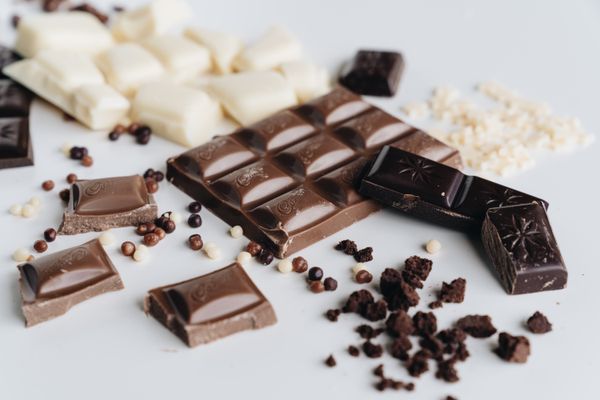
Chocolate & Sugar
Bitterness and astringency in chocolate are two different sensations
One is a taste registered by receptors on the tongue and the other is a physical drying of the mouth, they come from unrelated compounds, and confusing them makes a bar impossible to describe.
By Amrita Kohli3 min read
Two words used interchangeably for unrelated events
Ask people to describe a dark chocolate and bitter and astringent will be offered as near-synonyms, both meaning roughly that the bar was hard work. They aren’t the same thing at all. Bitterness is a taste, detected by receptors that respond to particular molecules dissolved in saliva, and it registers as a flavour. Astringency is a tactile sensation, a puckering and drying felt across the whole mouth, and it is closer in kind to texture than to taste.
The distinction is worth making because the two respond to different treatments. Sugar suppresses bitterness quite efficiently and does relatively little for astringency. Fat and milk protein work on astringency and are less effective against bitterness. Knowing which one is bothering you tells you what would fix it, and it also tells you something about how the beans were handled before anybody made a bar out of them.
Bitterness comes from the alkaloids and from fragments of protein
The most familiar bitter compounds in cocoa are theobromine and, in smaller quantity, caffeine. Both are alkaloids, both are present in the bean from the outset, and both survive fermentation and roasting substantially intact, which means the bitterness they contribute is essentially a property of the cocoa itself. A bar with more cocoa solids in it has more of them, which is the simplest reason a high-percentage bar tastes stronger.
They are not the only source. Fermentation breaks down the bean proteins into peptides and amino acids, and some of the peptides produced are themselves bitter. That fraction is variable, and it depends on how the fermentation went, which is why two bars of identical percentage from different origins can differ noticeably in how bitter they read. Roasting modifies some of these compounds and generates others, so the roast is a lever as well.
Astringency is protein being pulled out of your saliva
Saliva contains proteins that lubricate the mouth, and a family of plant compounds called polyphenols bind to them and precipitate them out of solution. When that happens the lubrication is briefly lost and the surfaces of the mouth drag against one another, which the brain interprets as dryness and roughness. It is the same mechanism that makes a strong tea or a young red wine feel the way it does, and cocoa beans are extremely rich in the compounds responsible.
Because it is a physical effect and not a taste, astringency builds up over successive mouthfuls and takes longer to clear than a bitter note does. It is also felt in places a taste isn’t — the sides of the tongue, the roof of the mouth, the inside of the cheeks. A tasting note describing a bar as drying rather than bitter is being precise rather than fanciful.
Fermentation reduces the polyphenols, and that is much of its purpose
A raw, unfermented cocoa bean is close to unpleasant, and astringency is a large part of why. During fermentation the cell structure breaks down, polyphenols leach out and oxidise, and their capacity to bind salivary protein falls sharply. Roasting continues the process by degrading some of what remains. Under-fermented beans stay astringent no matter what is done to them afterwards, which is one of the more common defects in poorly handled cocoa.
This sits alongside the better-known point that fermentation builds flavour precursors. It is a separate effect, running on the same schedule: one process is creating the compounds that will become aroma during roasting, and the other is destroying compounds that would otherwise dry the mouth. Both need the fermentation to have been done properly, and neither can be fixed downstream.
Milk, sugar and fat each mask a different thing
Milk is unusually effective against astringency, because casein binds polyphenols readily and gets to them before your saliva does. That is a well-understood interaction and it is a substantial part of why milk chocolate is easier to eat in quantity than dark, quite apart from the sugar. Cocoa butter helps too, by coating the mouth and physically reducing contact. Sugar, meanwhile, does most of its work on the bitter taste rather than on the drying.
Which is why a high-percentage bar should not be described as simply stronger. Raising the cocoa content raises the alkaloids and the polyphenols together while cutting the sugar and, usually, some of the masking dairy, so three things change at once and in the same direction. Two bars at the same percentage can still differ widely, because origin, fermentation, roast and added cocoa butter all move these compounds independently of the number on the wrapper.
Common questions
Why does a strong chocolate leave my mouth feeling rough?
That is astringency rather than bitterness. Polyphenols in the cocoa bind the lubricating proteins in your saliva and precipitate them, so the mouth briefly loses its slipperiness. It builds with each piece and takes a while to clear, which is why water helps less than a mouthful of milk.
Does a higher cocoa percentage always taste more bitter?
It usually does, since more cocoa solids means more theobromine and less sugar to mask it, but the relationship is loose. Fermentation, roast and origin change the alkaloid and polyphenol load considerably, so a well-made bar at a high percentage can be gentler than a poorly made one ten points lower.
Is astringency in chocolate a fault?
A little is normal and some styles are prized for it. Pronounced astringency that dominates the finish usually indicates under-fermented beans or a very light roast, and it is generally treated as a defect. It is not the same as an intense or bitter bar, which can be perfectly clean in the mouth.
Senior writer, The Last Bite
Amrita has written about baking basics, chocolate & sugar, frozen for most of the last decade and is unreasonably interested in the detail nobody else checks.