Pastry
Freezing raw dough asks a different question of every dough
Ice cuts through a gluten network, kills a share of the yeast and does almost nothing at all to butter, so the same freezer that ruins one preparation preserves another for months.
By Amrita Kohli4 min read

Freezing isn’t a pause button
It is tempting to treat a freezer as a way of stopping time, and for some preparations that is nearly true. For others it is a process in its own right, with its own chemistry and its own damage, and the difference between the two comes down to what the dough was relying on for structure. A dough held together by fat is largely indifferent to being frozen. A dough held together by a hydrated protein network and a living organism is not.
The mechanism of the damage is the same one that ruins a strawberry: water inside the material forms crystals, and those crystals are sharp, and they grow. What differs is what they cut through and what that costs. In fruit it is cell walls, and the consequence is collapse on thawing. In dough it is the gluten network and the yeast cells, and the consequence shows up as a loaf that won’t rise.
Ice crystals cut the network, and slow freezing cuts more
Gluten in a proofed or partly proofed dough is a continuous elastic film wrapped around gas cells, and ice crystals growing through it sever those films. A frozen dough thawed and baked will hold less gas than the same dough baked fresh, and the loss compounds over weeks in the freezer, because crystals continue to grow slowly even at freezer temperatures.
Rate matters for the usual reason. Fast freezing gives many small crystals and less mechanical damage; slow freezing gives fewer large ones and more. A domestic freezer is slow, so shaped pieces frozen individually on a tray fare considerably better than a large mass frozen as a block, since the smaller the piece the faster the heat leaves it. This is one of the few places where the professional advice and the practical domestic advice are identical.
Yeast survives freezing badly, and its death is not neutral
A proportion of the yeast in any frozen dough dies, and more dies the longer the dough is held. That alone would only mean a slower rise. The complication is that dying yeast cells release glutathione, a compound that acts as a reducing agent on the gluten network and weakens it directly, so the dough loses both its raising power and its ability to hold what gas it does produce.
Two practical rules come out of this. Dough for freezing is normally made with more yeast than the same dough would otherwise need, to allow for losses. And it is generally frozen before proofing rather than after, since a proofed dough has an expanded, delicate structure full of gas cells that ice damages far more readily, and its yeast has already spent much of its available sugar. Commercial frozen dough formulations also lean on stronger flour and on improvers for exactly this reason.
Fat-based doughs freeze best of all
A shortcrust or a sweet pastry has little developed gluten, no yeast, and a structure that depends on solid fat being distributed through flour. Freezing changes none of that. The fat is already solid, the water content is low, and there is no living organism to kill. These doughs can be frozen raw for months, rolled or in a block, and they bake essentially as they would have done fresh.
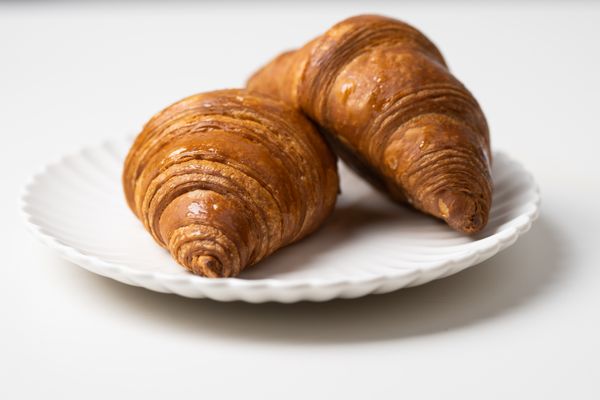
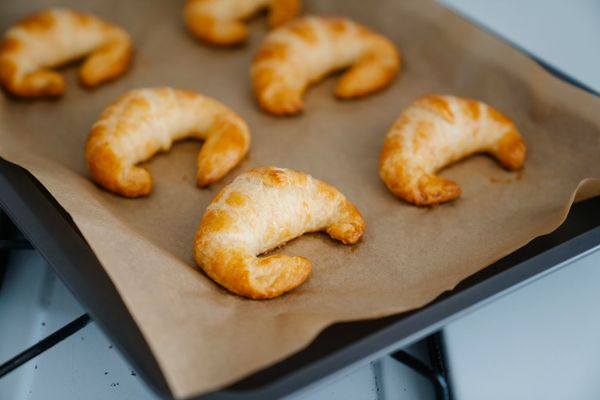
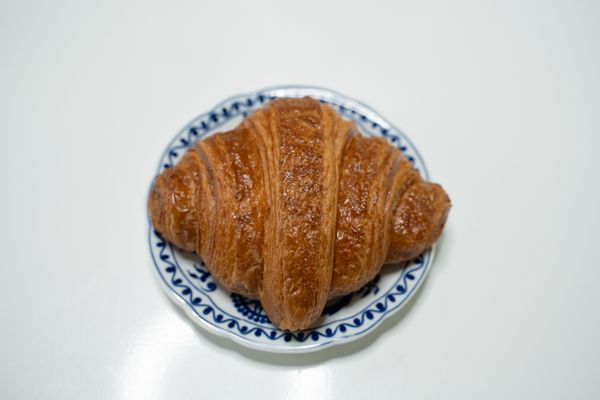
Laminated doughs sit in between and are worth freezing at the right stage. A finished, unproofed croissant freezes reasonably well; a proofed one doesn’t, and neither does a dough that has been frozen so long that the butter layers have dried and become brittle. Cookie dough is the easiest case of all, and portioning it before freezing means it can go straight into the oven from frozen, which incidentally gives a thicker cookie because the fat has further to go before it melts.
Par-baking splits the process into two visits to the oven
The commercial answer to all of this is to move the freezing to the other side of the bake. In par-baking, a loaf or a pastry is baked until its structure has set and its starch has gelatinised but before the crust has developed colour, and it is then cooled, frozen and finished later. The yeast has done its work and its survival no longer matters, and the gluten network has already been converted into something rigid that ice cannot deflate.
The trade is in keeping quality. A par-baked loaf goes through the setting temperatures twice and loses moisture each time, and its starch begins the slow recrystallisation of staling from the first bake onwards, so it goes stale unusually quickly after the second. That is a perfectly reasonable bargain for something sold within an hour of finishing and a poor one for a loaf meant to last three days, which is roughly the shape of the argument about bake-off bread generally.
Common questions
Can I freeze bread dough after it has risen?
You can, and it will work less well. A proofed dough is full of expanded gas cells with thin walls, and ice crystals damage those readily, so the loaf comes out flatter. Freezing after shaping but before the final proof is the better point, and using slightly more yeast compensates for the losses.
How long does frozen dough actually last?
For enriched or yeasted dough, a few weeks at domestic freezer temperatures, with the rise weakening steadily throughout. Shortcrust and cookie dough keep for months with no meaningful change, because they depend on fat rather than on protein or on anything alive.
Why does par-baked bread go stale so quickly?
Because it has been through the oven twice and lost moisture on both occasions, and because starch retrogradation began during the first bake rather than the second. It is at its best within a short window of finishing, which suits a shop baking through the day and suits a household loaf considerably less.
Senior writer, The Last Bite
Amrita has written about baking basics, chocolate & sugar, frozen for most of the last decade and is unreasonably interested in the detail nobody else checks.