Pastry
Filo is stretched rather than folded and the gluten decides whether it can be
Layered pastries divide into those built by folding fat into dough and those built by pulling one dough impossibly thin, and the second kind needs a completely different flour.
By Faisal Ahmed3 min read

Two entirely different routes to a layered pastry
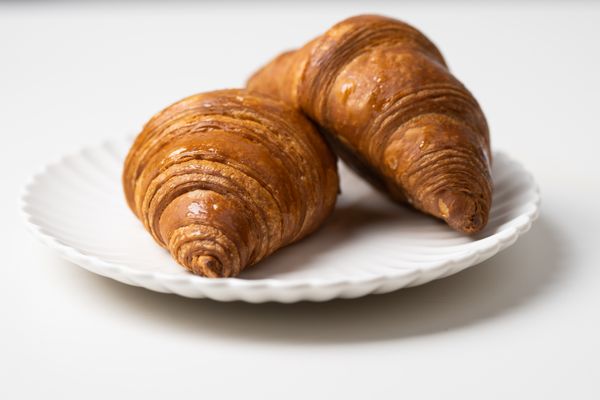
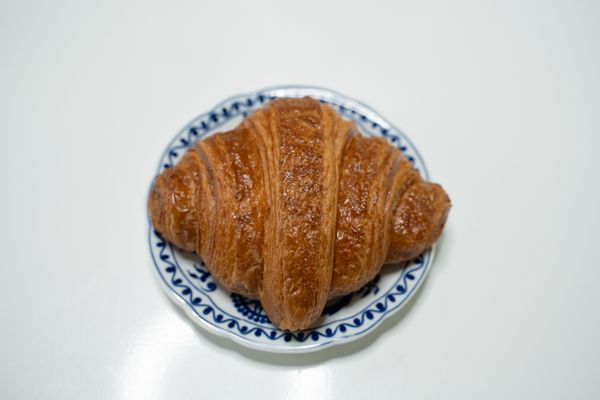
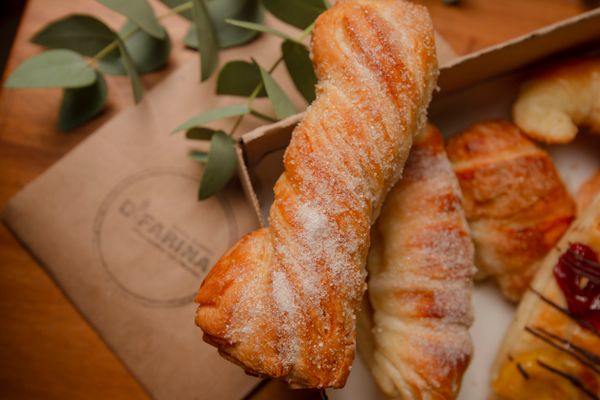
A laminated pastry gets its layers by folding a block of fat into dough repeatedly, so that a few folds produce hundreds of alternating sheets. A stretched pastry gets them by taking a single piece of dough and pulling it until it is nearly transparent, then brushing it with fat and stacking the sheets by hand. The end result looks similar on a plate and the two doughs have almost nothing in common in composition or handling.
The stretched family includes filo and the strudel dough of central Europe, along with a number of related pastries across the eastern Mediterranean and western Asia. The lamination family includes puff, croissant dough and their relatives. It is worth keeping the distinction clear, because advice that is sound for one is often actively wrong for the other. Keeping laminated dough cold is essential; keeping strudel dough cold makes it impossible to stretch.
Stretching demands extensibility, which is a specific property
Gluten has two characteristics that pull against each other. Elasticity is the tendency to spring back; extensibility is the willingness to stretch without tearing. A dough for stretching needs a great deal of the second and as little as possible of the first, because every bit of spring-back fights the pull. This is why strudel dough is made with a strong flour but then given a long, warm rest, and why the fat and acid in the recipe are there deliberately.
A small quantity of oil in the dough lubricates the gluten strands so they slide past one another rather than gripping. A splash of vinegar or lemon juice weakens the network slightly through the effect of acid on the proteins. Warm water hydrates the flour faster and keeps the dough relaxed. Every one of these is aimed at trading elasticity for extensibility, which is precisely the opposite of what a bread baker is usually trying to achieve.
Resting is not optional and cannot be shortened
When a dough is kneaded, the gluten network is put under tension and it holds that tension for a considerable time. Resting allows the strands to rearrange and release it, a process usually called relaxation, and it happens faster at warm temperatures than cold. A strudel dough is typically kneaded until very smooth, oiled, and left covered in a warm place for anything from half an hour to a couple of hours before anyone attempts to stretch it.
Attempting the stretch too early is the classic failure and it is unmistakable: the dough pulls back as fast as you pull it out, thins unevenly and then tears. Once torn, it is not repairable in any useful sense, because the tension that caused the tear is still present everywhere else. The only remedy is to gather it up, rest it again and start over, having lost nothing but time.
The fat goes between the sheets, not into the dough
In lamination the fat is inside the dough block and its job is to keep the layers apart while steam forces them upward. In a stretched pastry the fat is brushed onto each finished sheet, and its job is to keep the sheets from fusing and to fry them crisp from both sides during baking. Melted butter, clarified butter and oil are all used, and each produces a slightly different colour, flavour and degree of crispness.
That difference in where the fat sits explains the difference in texture. Laminated pastry puffs, lifting into a tall open structure with visible cells. Stretched pastry does not puff at all — it crisps, giving a shattering, papery texture with many thin dry layers and no significant rise. Neither can imitate the other, which is why a substitution between them changes the dish rather than just the shopping list.
Working with sheets that dry out in minutes
Filo sheets are so thin that they lose their moisture to the air very quickly and turn brittle, and a brittle sheet cracks rather than folds. The universal practice of keeping the stack covered with a damp cloth while working is not fussiness — a sheet left exposed for a few minutes becomes unusable. Working out the assembly before unwrapping the pastry saves more sheets than any amount of care afterwards.
Home-made and shop-bought are genuinely different products. Commercially made filo is rolled by machine to a consistency no hand can match, and it is thinner and more uniform than most people can achieve. Hand-stretched dough is slightly thicker and more irregular, which many cooks prefer because it gives a substantial, chewier layer alongside the crisp ones. Preferring one is a legitimate taste rather than a claim about quality.
Common questions
Can I use filo instead of puff pastry?
Only where crispness rather than rise is wanted. Filo will not puff, so anything relying on lift — a vol-au-vent, a pie lid meant to dome — will not work. Buttered layers of filo make an excellent crisp topping and a poor structural one.
Why does my strudel dough tear when I stretch it?
Usually insufficient resting, so the gluten is still under tension from kneading. A warm, well-oiled rest of an hour or more makes an enormous difference. Working on a floured cloth and stretching with the backs of the hands rather than the fingertips also helps distribute the pull.
Does filo need to be thawed slowly?
Yes, ideally overnight in the refrigerator and then brought to room temperature still wrapped. Rushing it produces condensation between the sheets, which glues them together, and separating stuck sheets tears them almost every time.
Consumer editor, The Last Bite
Faisal writes the explanatory pieces on baking basics, chocolate & sugar, frozen and is happiest when a piece answers the question completely.