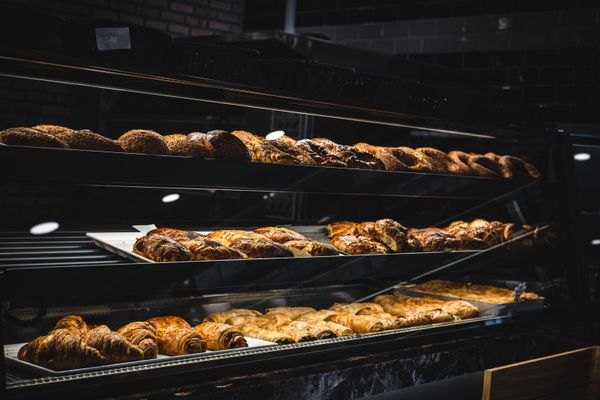
Sweet History
Coffee and tea created the demand for something to eat alongside them
Two bitter imported drinks arrived in Europe within a few decades of each other, both were taken with sugar, and an entire class of small sweet baked goods grew up to accompany them.
By Tomas Bergqvist4 min read

Three bitter drinks and one sweetener
Coffee, tea and chocolate all reached Europe in roughly the same era, and all three share a peculiarity: they are bitter, stimulating, and drunk hot. None of them had an obvious precedent in the European diet, and all three were taken with sugar almost immediately, which was possible only because sugar was becoming cheaper at exactly the same time.
The coincidence isn’t entirely a coincidence, since the plantation economies that lowered the price of sugar and the trading networks that brought the drinks were part of the same expansion. What matters for a kitchen is the result: a habit of drinking something hot, bitter and sweetened, several times a day, in company. That habit needed food to go with it, and none of the existing food fitted particularly well.
Why a small dry baked good is the right answer
Something eaten with a hot drink has constraints that a dessert eaten at a table doesn’t. It has to be handled with one hand, survive being carried and stored, not require cutlery, and not be so rich that it competes with the drink. It benefits from being dry, because a dry biscuit takes up liquid pleasantly and a wet cake does not.
Sweetness is doing something specific in that pairing rather than simply making the food pleasant. Bitterness and sweetness suppress one another on the palate, so a sweet mouthful between sips genuinely reduces the perceived bitterness of the drink, and the drink in turn cuts the richness of the food. The pairing works chemically as well as socially, which is probably why it settled so quickly and in so many places at once.
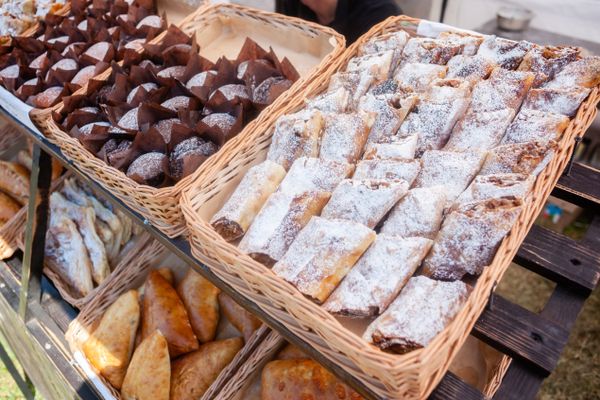
Those constraints describe the biscuit almost exactly, and they describe most of what appeared alongside these drinks across the continent: hard sweet biscuits, twice-baked breads, small dry cakes, and things specifically designed for dunking. The Italian biscotto is dried deliberately to the point of needing a liquid; the same logic produced rusks and dry spiced biscuits in the north.
The coffeehouse and the pastry shop grew up together
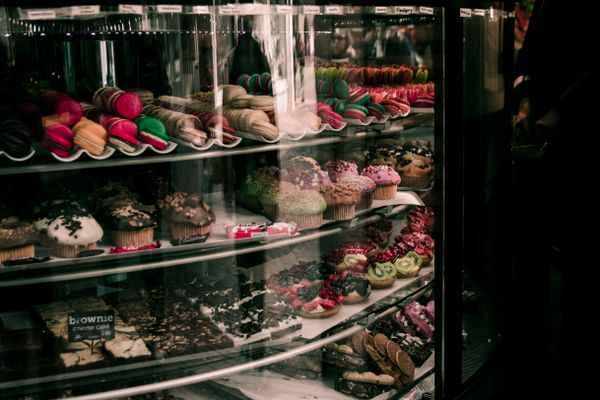
Wherever coffee took hold as a public institution, a trade in accompanying baked goods followed within a generation. Central Europe made this a permanent architectural feature: the Viennese and Budapest café tradition is built on the pairing of coffee with an extensive pastry counter, and the two are still commercially inseparable. Elsewhere the pattern took different forms — the Parisian café with its narrower selection, the Italian bar with a standing pastry eaten quickly in the morning.
These aren’t just customs. They are the reason certain pastries exist in the sizes and shapes they do. A pastry made to be eaten standing up in three minutes is a different object from one made to be served in slices after a meal, and both traditions produced a repertoire suited to their setting.
Tea reorganised the day rather than the counter
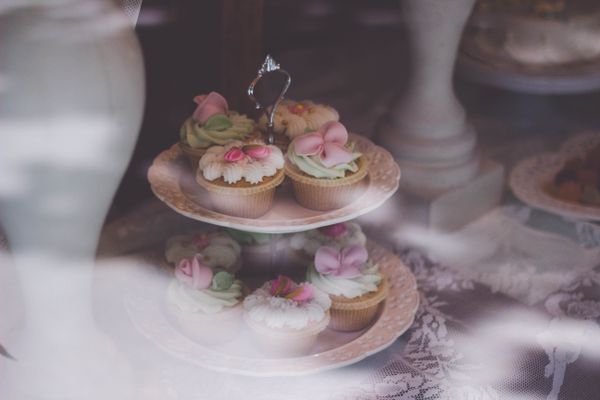
Tea in Britain took a domestic rather than a public form, and the food that grew around it reflects that. The nineteenth-century convention of an afternoon meal built around tea created a demand for small sandwiches, scones and cakes designed to be served at home in quantity, which is a very different brief from a biscuit eaten standing at a bar.
Tea also travelled outward and acquired accompaniments wherever it landed, which is why comparable pairings exist across the tea-drinking world with entirely different foods attached. The constant is the drink and the interval it occupies in the day; the variable is whatever the local kitchen could produce that suited being eaten in small pieces with something hot.
Because the setting was domestic, the recipes spread through household books and became part of ordinary home baking rather than a professional trade. That distinction still shows. A great deal of British sweet baking is home baking in origin, made without specialised equipment, while the central European café repertoire assumes a professional kitchen and often cannot sensibly be made at home.
Sugar in the cup changed the taste for sugar everywhere
Taking sugar in a drink several times a day is a large and continuous exposure, and it seems to have shifted expectations of sweetness across the whole diet. It also made sugar a routine household purchase rather than an occasional luxury, which is what allowed sweet baking to move out of aristocratic kitchens and into ordinary ones.
The direction of causation is genuinely hard to untangle and historians disagree about how much of the rise in sugar consumption these drinks are responsible for. What is not in doubt is the association: the countries that took up the hot drinks earliest are the countries where a distinct culture of small sweet baked goods developed first, and the two appear in the record together rather than one after the other.
Common questions
Why are biscotti baked twice?
The second baking drives out remaining moisture, producing something dry enough to keep for weeks and hard enough that it is meant to be softened in a drink. That was a practical virtue before airtight storage, and it survives as a texture people now choose deliberately.
Did tea and coffee replace anything?
In much of Europe they displaced small beer and wine as everyday drinks, which is a substantial change in what people consumed all day. They also arrived alongside a general increase in the availability of sugar, and the two changes are difficult to separate in the record.
Why is Viennese pastry so elaborate compared with British home baking?
Because it developed inside a professional café trade with specialist staff, laminating and sugar work as daily skills, and customers paying for the result. British sweet baking grew mostly in domestic kitchens from printed recipes, so it favours methods a household could manage without a pastry section.
Editor, The Last Bite
Tomas writes the explanatory pieces on baking basics, chocolate & sugar, frozen and thinks most subjects are more interesting once you know how they work.